


Institutional Security and Safety Frameworks
Lecturer Haval Abdulkhalik, Molecular Microbiologist
Brief Summary of the Topics
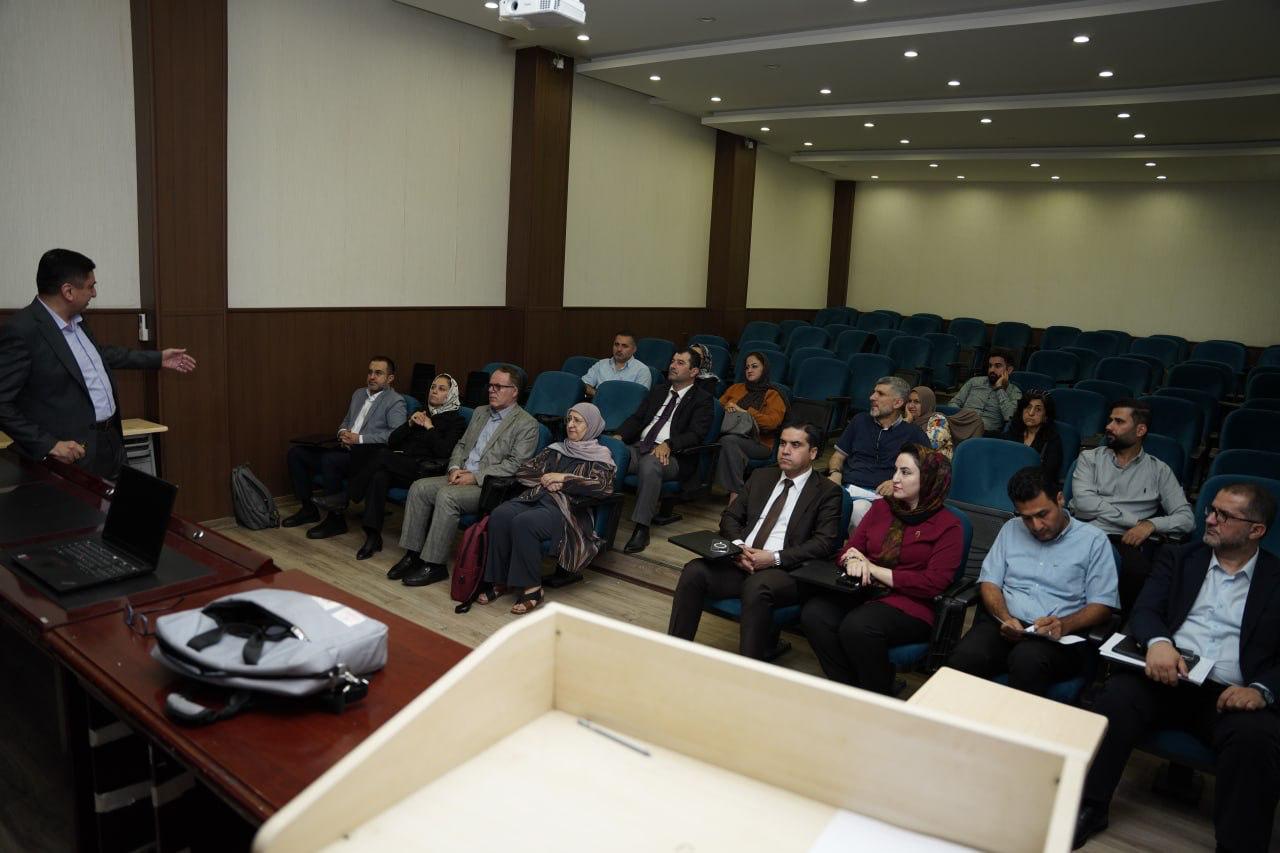
Higher education institutions face a complex array of biological hazards and physical or cyber threats. Bridging the operational gaps between laboratory safety standards and digital infrastructure protection is necessary for modern academic governance. Lecturer Haval Abdulkhalik presented two core sessions focused on establishing operational resilience within academic and clinical environments.
The first topic addressed the fundamental distinctions between Biosafety and Biosecurity. While both frameworks share the goal of mitigating risks tied to biological materials, their scope and enforcement differ significantly:
- Biosafety addresses the prevention of accidental exposure to or release of hazardous biological agents. Its strategies include formal risk assessment, containment, personal protective equipment (PPE), and safe laboratory practices.
- Biosecurity focuses on preventing the loss, theft, misuse, diversion, or intentional release of pathogens, toxins, and sensitive research data. Its methods include physical perimeter security, strict access control, and personnel reliability measures.
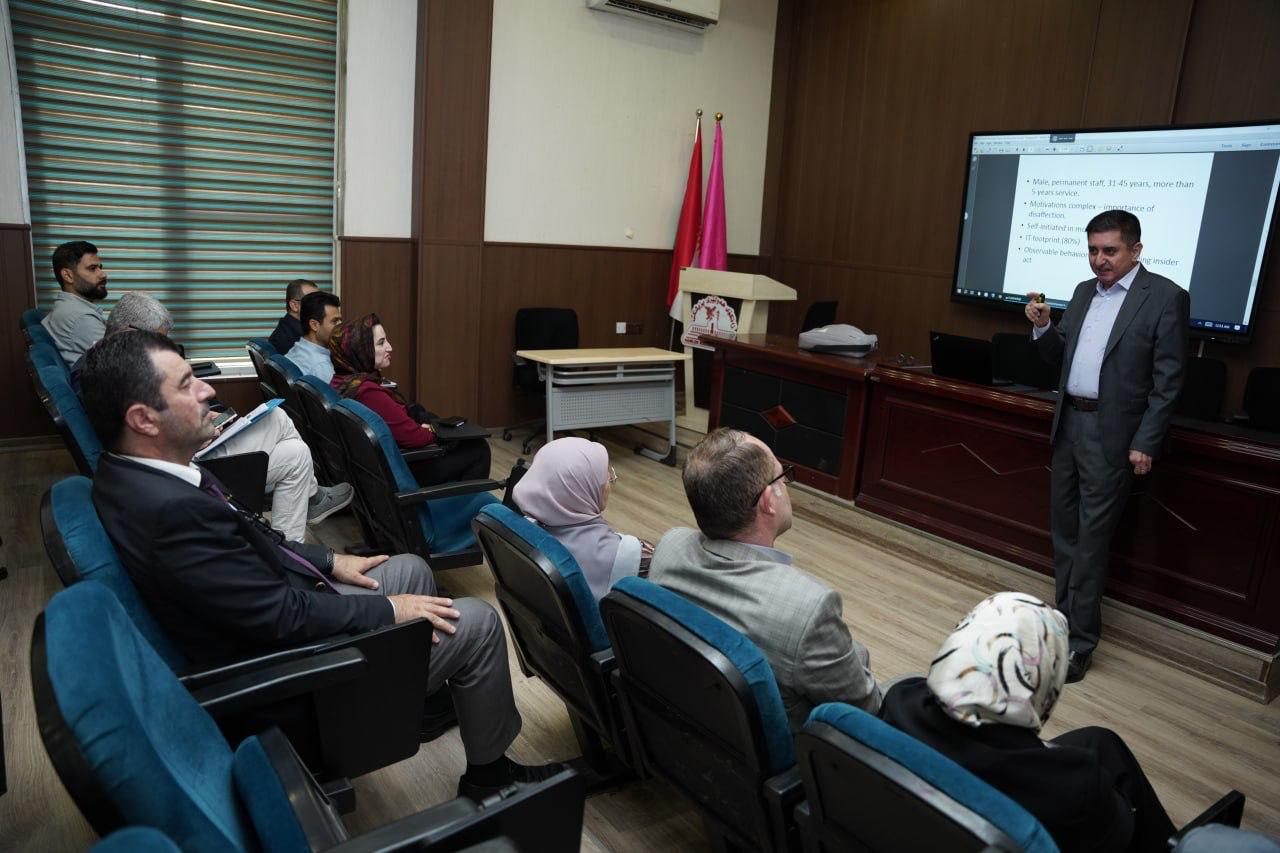
The second topic examined Human Vulnerabilities and Insider Threats within university environments. Higher education settings rely on open, collaborative networks, making them vulnerable to internal and external risks. This session detailed how insider threats—spanning negligent, malicious, and third-party actors—can compromise institutional integrity. It analyzed threat actor behaviors, systemic weaknesses, attack vectors such as unauthorized disclosure and direct sabotage, and methods to detect operational risks before damages occur.
Why These Presentations Matter to the Academic Sector
Universities and academic medical centers serve as hubs for sensitive research, proprietary data, and public health initiatives. They maintain extensive digital infrastructures, process financial records, and house confidential personal data alongside high-consequence biological materials. Consequently, higher education institutions are high-value targets for cybercriminals, espionage, and security breaches.
- Protecting Public Health and Research Integrity
Biological laboratories working with dangerous pathogens face severe consequences if containment fails. An accidental exposure due to poor biosafety protocols endangers lab personnel and surrounding communities. Conversely, a failure in biosecurity creates opportunities for theft or dual-use misuse of biological materials. Understanding where containment protocols end and access security begins ensures that universities comply with regulatory mandates while keeping research safe, valid, and uncompromised.
- Safeguarding Digital Assets and Institutional Operations
Academic environments thrive on transparency and accessibility, but this open culture can expose technical vulnerabilities. Insider threats pose a unique challenge because actors already possess authorized access. A negligent employee clicking a phishing link can compromise university networks just as easily as a malicious actor intentionally extracting intellectual property. Addressing these human vulnerabilities reduces financial liabilities, avoids severe legal fallout, and prevents reputational damage that disrupts institutional growth.
- Fulfilling Statutory and National Security Requirements
Higher education institutions operate within national regulatory frameworks, such as the Iraq National Anti-Corruption Strategy and federal biosafety standards. Integrating these guidelines into university governance ensures compliance and helps build a cohesive defense system across both laboratory and administrative departments.
Key Takeaways and Future Directions
Building a secure academic environment requires moving away from fragmented safety procedures and adopting an integrated strategy. The following core principles provide a roadmap for future institutional development:
Dynamic Risk Assessment Strategy
Institutions must evaluate risk using formal quantitative frameworks rather than basic intuition. Threat likelihood must be evaluated alongside consequence severity:
Applying this formula allows administrators to prioritize resource allocation effectively, addressing high-impact vulnerabilities in digital infrastructure and laboratory settings first.
Unified Safety and Security Governance
- Dual-Layered Laboratory Controls: Biological facilities must combine standard containment protocols (biosafety) with physical access limits, identity verification, and inventory control (biosecurity).
- Tiered Digital Access: IT departments should enforce least-privilege access models, ensuring employees and students only access network areas necessary for their specific roles.
Proactive Security Awareness Culture
Technical safeguards alone cannot prevent security breaches. Future administrative policies must prioritize continuous human risk management:
- Conduct regular user awareness training to reduce negligent insider behaviors, such as falling for phishing attempts or mismanaging credentials.
- Implement non-intrusive behavioral monitoring and clear reporting channels to detect observable warning signs before malicious acts occur.
- Perform routine security and biosafety audits to evaluate structural weaknesses in physical facilities and network systems.
 Iraq, Kurdistan Region,