.jpeg)
.jpeg)
.jpeg)


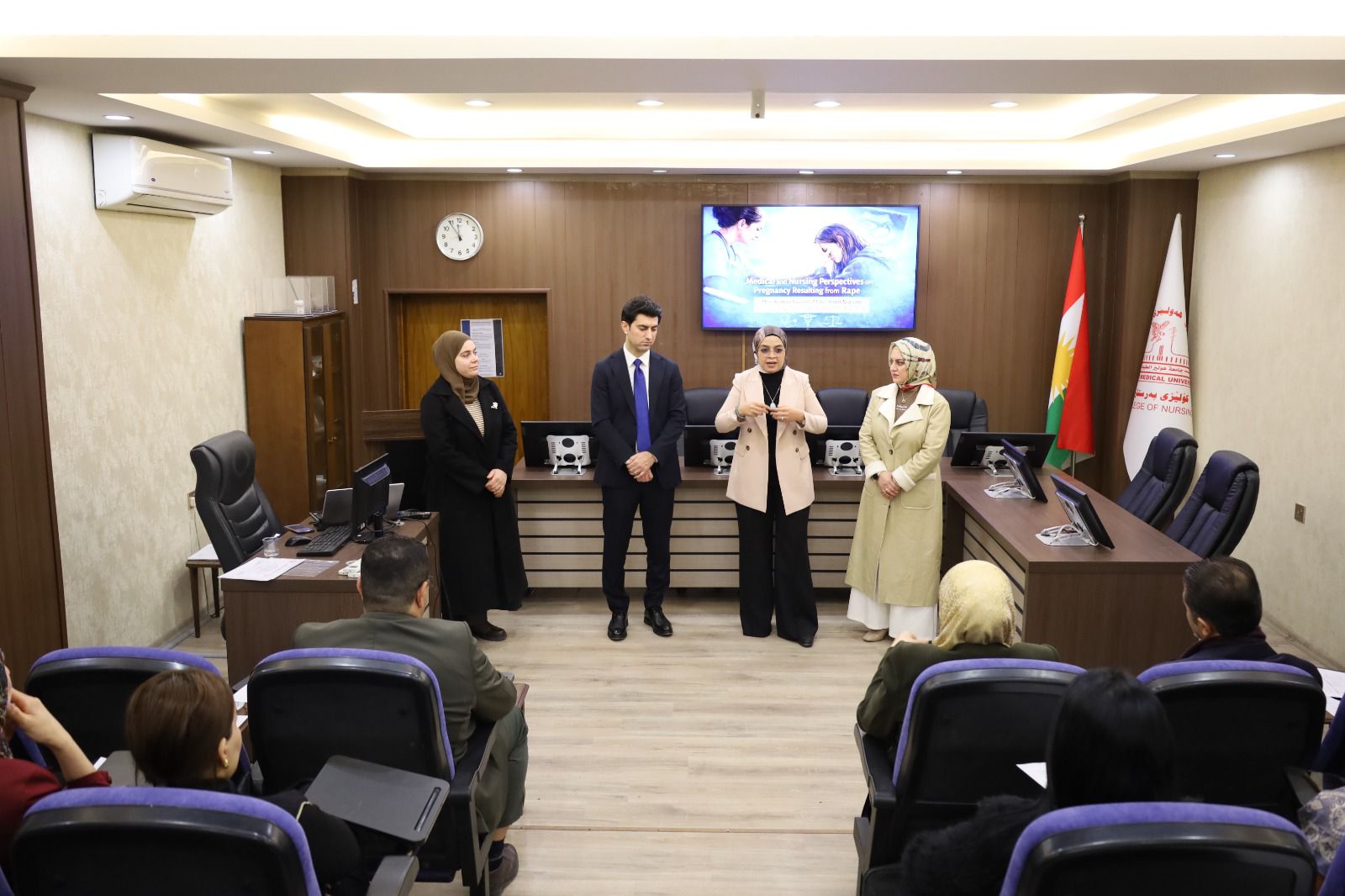
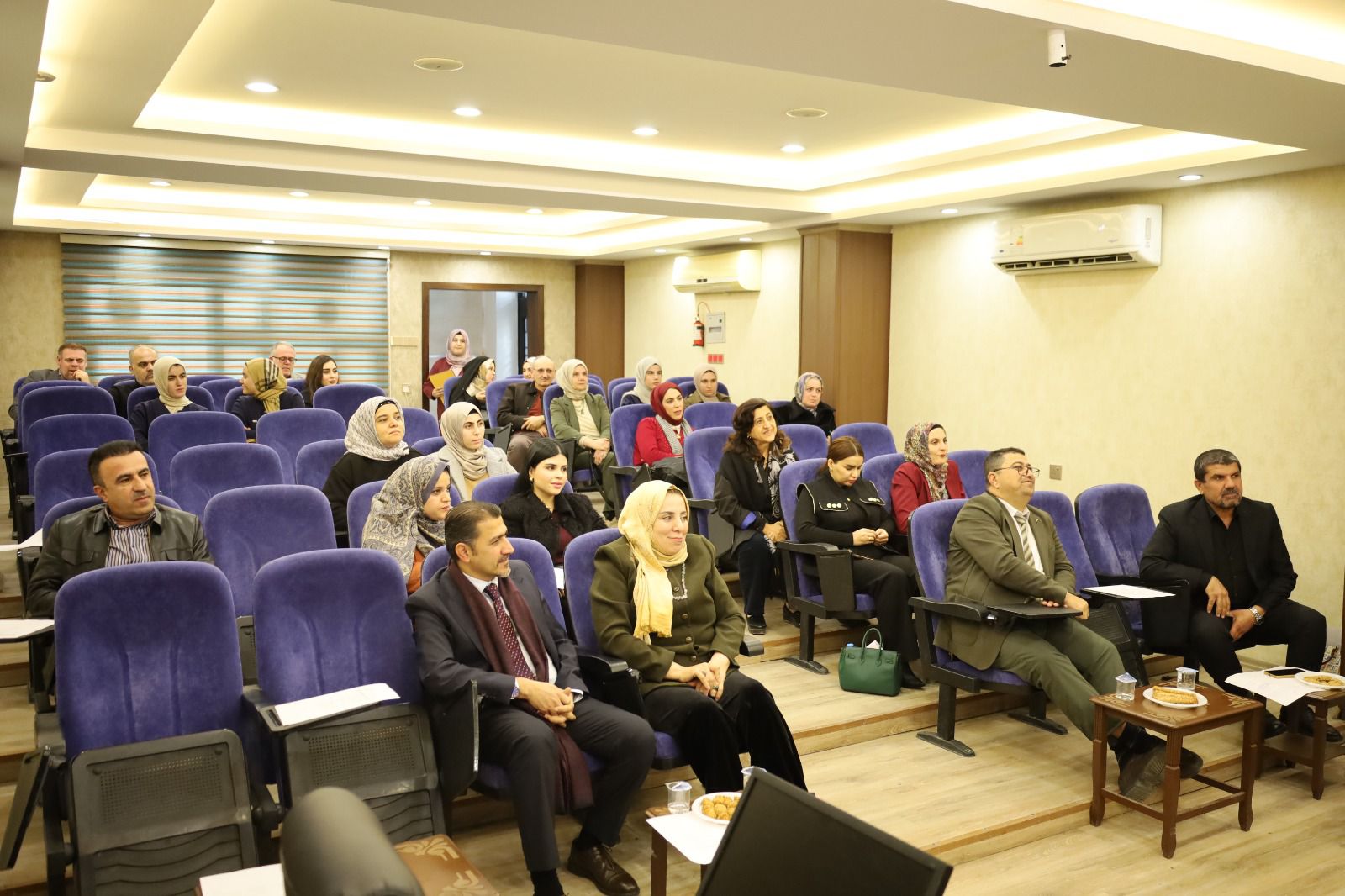
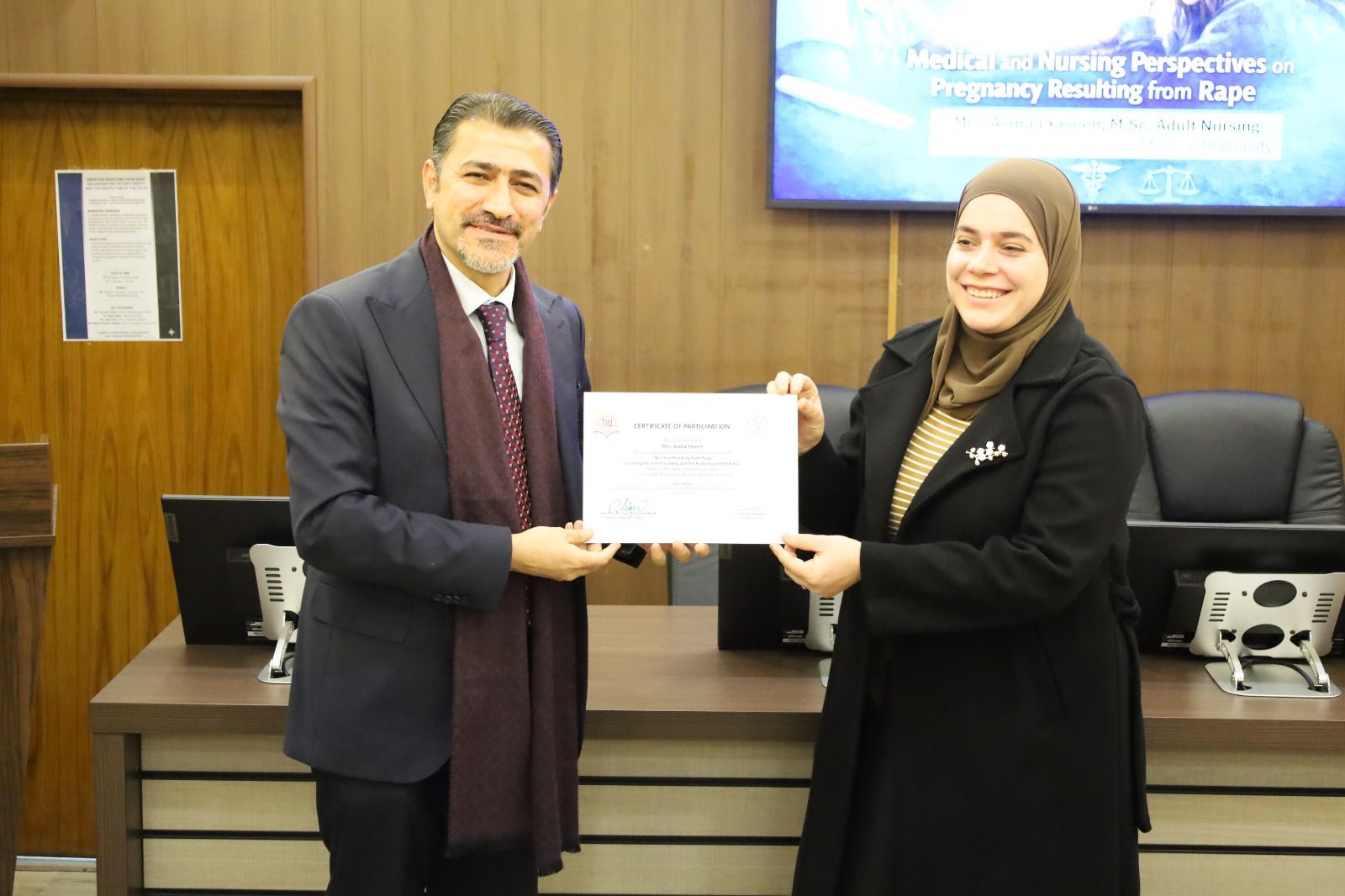
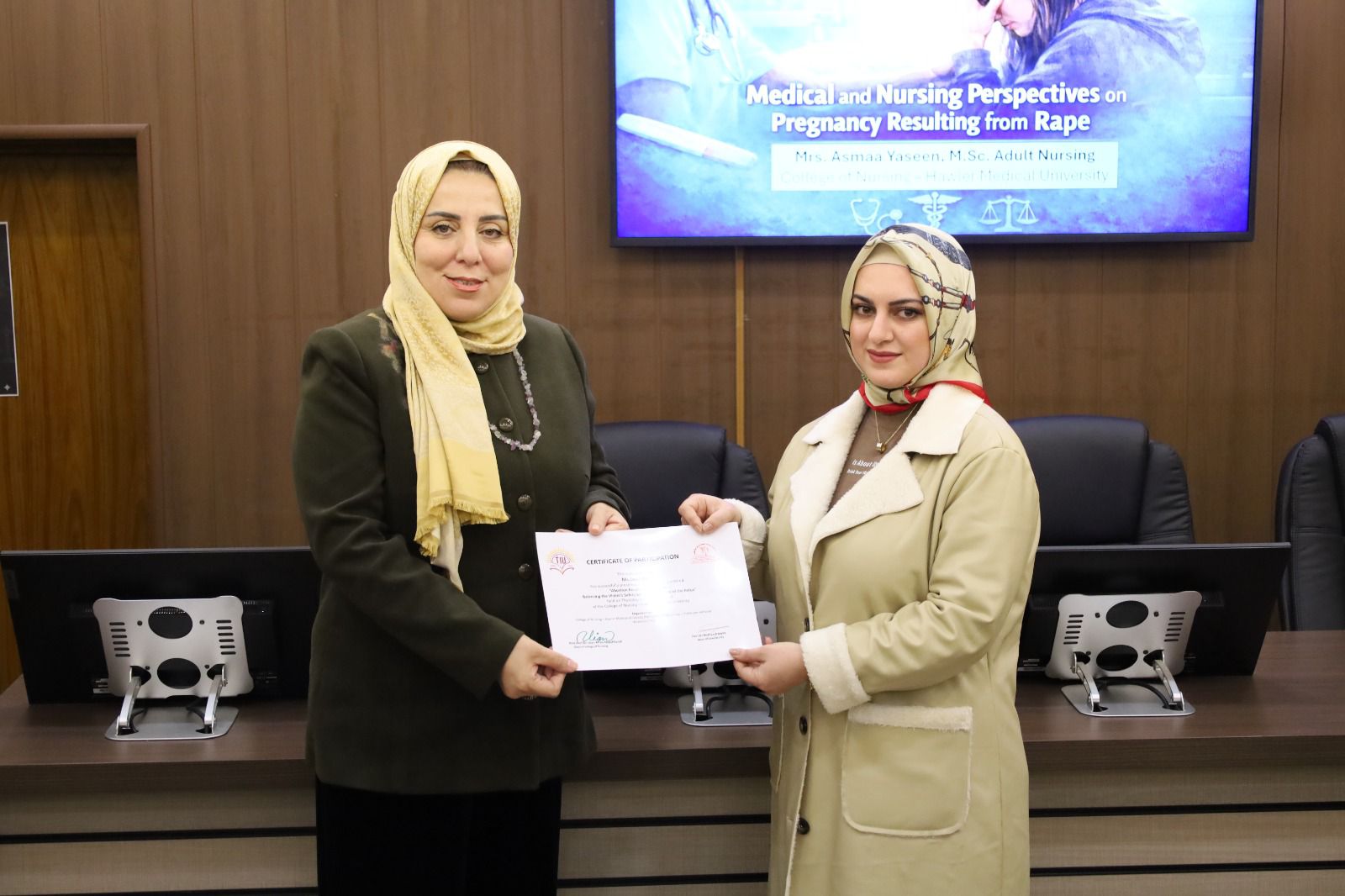
The College of Nursing at Hawler Medical University, in collaboration with the Faculty of Law at Tishk International University, successfully conducted an interdisciplinary workshop entitled “Abortion Resulting from Rape: Balancing the Victim’s Safety and the Protection of the Fetus.” The workshop was held on 5 February 2026 at the College of Nursing seminar hall and brought together academic staff and professionals from nursing, midwifery, law, and mental health disciplines.
Speakers:
Lect. Dr. Kastro Salim (Law Department, TISHK International University)
Research Assistant. Asmaa Yaseen (Nursing Department, HMU)
Research Assistant. Jwan Fars (Nursing Department, HMU)
Master Student. Bekhal Othman (Nursing Department, HMU)
The workshop aimed to foster informed, ethical, and evidence-based dialogue on one of the most sensitive and complex issues in reproductive and public health. It provided a structured academic platform to examine pregnancy resulting from sexual violence through integrated medical, legal, ethical, psychological, and human rights perspectives, with particular attention to the context of the Kurdistan Region of Iraq.
Expert-led sessions addressed the medical and nursing implications of rape-related pregnancy, the legal framework governing abortion and women’s rights, the professional role of midwives in managing such cases, and the psychological consequences of sexual violence with an emphasis on trauma-informed mental health care. The program concluded with a multidisciplinary panel discussion that encouraged critical reflection, scholarly exchange, and open dialogue among participants.
Throughout the workshop, emphasis was placed on safeguarding the dignity, safety, and well-being of survivors while carefully considering ethical responsibilities and legal obligations related to fetal protection. The discussions highlighted the essential role of healthcare and legal professionals in delivering compassionate, non-judgmental, and rights-based care, guided by professional ethics and existing legal frameworks.
This academic activity reflects the shared commitment of both institutions to advancing interdisciplinary collaboration, strengthening professional competencies, and addressing complex societal and health challenges through scholarly engagement. The workshop represents an important step toward promoting informed policy dialogue, ethical clinical practice, and collaborative approaches that support survivors of sexual violence within medical and legal systems.